Showing posts with label Apple. Show all posts

Thursday, April 23, 2020

Technical Knockout: How COVID-19 Put Society and Big Tech on the Canvas

It is probably safe to say that few of us anticipated the impact of COVID-19.

The virus has affected every facet of our lives.  Aside from the terrible and tragic human toll, societal norms have been turned upside down.  Social distancing and shelter-in-place have become mandated across the globe.  Board games and jigsaw puzzles, seeming relics of a past era, have enjoyed a renaissance and in some cases are selling in greater numbers than during Christmas.  Sports events, ranging from the Summer Olympics to the NBA to Wimbledon, have been postponed or cancelled entirely.  Schools and universities have been shuttered resulting in teachers, parents and students alike undergoing a trial-by-fire as they struggle with distance learning and homeschooling.  More distressingly, the economy has been harpooned as 10 years of US job gains have been wiped out in the space of just 4 weeks.

Yet, five months on from its initial identification, we still have so many basic questions about this invisible foe:
  1. What was the virus's origin?  A "wet market" in Wuhan, China or something more sinister?
  2. Exactly how contagious and deadly is this virus?
  3. Can we develop immunity to the virus?
  4. How different is this year's global and regional mortality rate from the average* and from other key milestone years?
And how has Big Tech, perhaps unreasonably heralded as society's knight in shining armor, fared during this once-in-a-generation crisis?

+ Positives

On the plus side, the sprawling, highly distributed network that we call the internet, has enabled significant work to be performed from homes around the world.  Through Facebook, FaceTime, Zoom, RingCentral, Skype and other videoconferencing and collaboration tools, the internet has also enabled us to connect remotely with loved ones.  Despite the huge additional data loads, we have not -- to my knowledge -- suffered an internet meltdown of any meaningful magnitude.  The free transfer of information provided by the internet, has helped expose and highlight the lunacy of entities such as Harvard receiving a bailout.  Also, data collection and dissemination technology have enabled innumerable dashboards and data visualizations to convey, in excruciating near-real-time, the horror of the disease.  (My particular go-to dashboard has been this one.  Apparently, it was developed and is maintained by a high-school student named Avi Schiffman.)

The fact that we also have a robust physical delivery infrastructure -- with Amazon, UPS and FedEx at the forefront -- has helped to offset the imposed limitations around personal movement and the fear of contagion associated with in-person shopping.  There have been other positive contributions, including monetary donations, job creation, masks from 3D printers and more.

In addition, Apple and Google have partnered to develop a contact tracing API on their respective mobile operating systems.

- Negatives

However, on the other side of the ledger, Silicon Valley's technical might has not, to this point, contributed to the much-needed medical solution of a vaccine.

Furthermore, the fragility of those whose livelihood depends on the oft-trumpeted gig economy has been brutally exposed as Uber and Lyft fleets have largely ground to a halt and AirBnB -- only months removed from being considered the hottest IPO on the planet -- is suffering its own apocalypse.

The pandemic has also exposed, once more, the huge digital divide.

Even the previously mentioned positives are often two-edged swords.

The vast amounts of COVID-19 data available on the internet can leave our heads spinning and are sometimes seemingly contradictory.  Even when the data source is unquestioned -- including my go-to dashboard mentioned above that cites the CDC and WHO among its sources -- other troubling questions emerge such as "what are the precise definitions of the terms ACTIVE, RECOVERED and CRITICAL?"  This can lead to increased FUD (fear, uncertainty and doubt).

There have been significant supply chain and delivery issues that have required arcane "hacks" to get grocery delivery scheduled.

In addition, the contact tracing technology noted in the above article has its critics, mostly based on privacy concerns, and a significant number of devices will not be compatible.

Needless to say, society and big tech are facing a defining moment.  I believe and hope that we can all rise to the occasion by making sustained empathy a cornerstone of our recovery.  This trial has surely illustrated the value of each and every person, irrespective of wealth or status.

* NOTE: It took some sleuthing to address the frequent and troubling objection that the 2020 mortality rate is fairly typical and the COVID-19 numbers are simply manifesting as a "different cause of death".  However, by comparing the CDC's Average Daily Number of Deaths of 7,708 from 2017 (latest data I could find) to a recent 3-day rolling average of US COVID-19 deaths of 2,034 , we can reasonably conclude that 2020 is definitely anomalous.  Furthermore, in the same sample year of 2017 -- influenza and pneumonia which would be the counterparts to COVID-19 in a typical year -- account for only 2% of annual mortality.

Sunday, December 8, 2019

My Apple Smartphone is Kinda Dumb

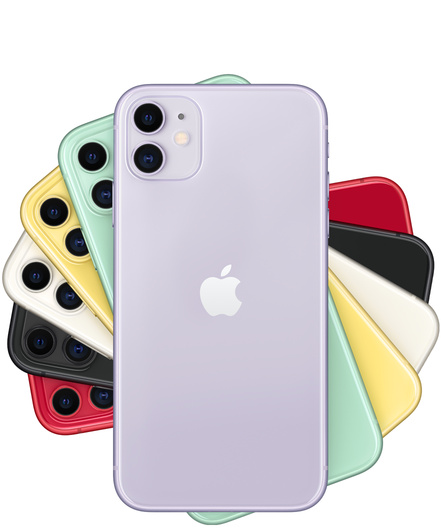
The iPhone is still considered, by most, to be the gold-standard in smartphone usability.  It has been around for 12+ years and my family has owned 4 different models, the latest being the iPhone 8.  I must concede that, aesthetically at least, the device continues to "wow".


However, when it comes to content management (file management, data synchronization and backup), I regard its capabilities as quite primitive, leading me to question how smart we should actually consider the device.  I will discuss specific shortcomings later, but I first want to speculate on why this apparent blind-spot from a company usually so visionary.  I hope you recognize the interdependent nature of these observations:
  1. An unnecessarily tight coupling with Apple's own iTunes and iCloud software, each of which has been criticized for its own usability issues.  
  2. Apple does not appear to have seriously invested in iPhone file management, data synchronization and back-up strategies beyond its own iCloud service.  This means, effectively, that the company is up-selling its customers additional iCloud storage as the "free tier quota" is quickly consumed. 
  3. Since the roll-out of the original iPhone, Apple's primary focus appears to have been on consumer-oriented features such as increased camera/photo resolution, video recording, voice control (Siri), touch ID and improved battery life.  Each of these enhancements play well in advertising campaigns as they are relatively easy to quantify.
  4. Although data synchronization as a concept is simple for most of us to grasp, it is deceptively nuanced and complex to implement.  There are offline and online trade-offs around caching for performance and real-time access to systems-of-record that have to be considered as the device switches between WiFi and cellular networks.  Furthermore, each application has its own notion of data attributes, think an iPhone Contacts app record versus a Microsoft Outlook Contact record.
  5. Apple corporation's notorious tendency to internally silo products and teams, likely make this type of enterprise-wide effort more difficult to anticipate and execute, even assuming the appropriate corporate stakeholder prioritization is in place.
  6. The smartphone class of devices has, in this regard, become a victim of its own success and ubiquity, as it increasingly becomes the hub of our digital lives.  Ever more data management responsibilities -- mostly around our social, entertainment and financial well-being -- are being piled onto a device that was originally conceived as a simpler computer for the masses.
The first two observations are manifestations of the (in my opinion) misguided vision of an Apple-only ecosystem.

While I deeply admire Apple and even many aspects of the iPhone itself, I am underwhelmed and disappointed with some of the iPhone's content management (file/synchronization/backup) capabilities.  Here are some specific problems:
  • Inconsistent photo and video synchronization behavior.  I have observed, across iPhone models running different iOS versions, the inability of the device to locally delete uploaded images and videos, even when explicitly instructed to do so.  As a result, the device becomes "gummed up" with copies of images that I considered archived, requiring serious detective work to resolve.
  • App organization.  While it has improved over time, the device's ability to organize and locate apps remains quite crude.
  • No unique device identifier appended to files.  This could help in a variety of ways during synchronization, upload, backup and organization.  At a minimum, it would help eliminate the possibility of file namespace collisions when multiple devices are archived to the same backup storage.
  • Limitations of Apple ID model.  Authentication through an Apple ID governs the features and data available to an iPhone user.  For example, it controls access to data stored in iCloud and purchases made through iTunes.  However, higher level data abstractions, such as an Apple customer's family and device inventory do not appear to be properly accounted for in the underlying architecture.  This results in Apple's customers having to employ unnecessary and clumsy workarounds to share content.
I challenge Apple to think different again.  Below are suggestions on how to make an even smarter phone:

  1. Offer an all Apple-ecosystem architecture and content management workflow that you (Apple) are able to simplify and optimize.  However, you must also offer a hybrid ecosystem architecture and content management workflow.  Most of us, in either or both our personal and professional lives, must straddle the Apple and non-Apple digital worlds.
  2. Continue (and complete) your evolution away from client-installed applications (e.g., iTunes and iCloud for Windows) towards a fully cloud-based architecture.
  3. Revisit the design that regards the Apple ID as the highest level data abstraction.  Consider the notion of a household entity that would allow multiple Apple IDs and devices to be associated, smoothing the opportunities to exchange and synchronize content.   
  4. Make your pricing model, for both the Apple-ecosystem architecture and the hybrid ecosystem architecture, simple and transparent.
  5. Provide the option for the device to "auto-organize" apps by categorizing using App Store attributes or user-defined tags or properties.

Monday, February 6, 2017

Developing Software Simply

Creating software is, without question, a complicated process.  Daily, I am reminded of this fact even after 25 years in the industry.  Despite having worked in high caliber teams and with many incredibly talented programmers, none was able to produce perfect software.


I still search for ways to improve as a technical manager and when developing personal projects.  Agile Software Development is the latest high profile methodology that describes the processes and principles upon which to develop software.  After reading this interesting article on Agile and its wide-ranging comments, it seems that the jury is still out on the methodology's relative merits.  Reflecting upon my direct exposure to Agile, to varying degrees depending upon the project and my role, there are aspects of it that I appreciate:

  • It provides important framework, context, and vocabulary (as, of course, does any methodology) 
  • It offers a "clean slate/less-is-more" mentality that has proven to be helpful in many human endeavors (writing, music, art, etc)
  • It encourages team empowerment and the flattening and distribution of decision-making

Perhaps above all, Agile emphasizes iterations.  I view this as a two-edged sword.  On the one-hand, it is a recognition of the "perfect software challenge" that we already noted.  On the other hand, it may become a self-fulfilling prophecy that limits quality.
Agile and, indeed, each software development methodology (waterfall, RAD, XP, and RUP) that I have employed -- once again, to varying degrees -- seems to provide an incremental quality uptick.  However, as many pointed out in the comments on the aforementioned Agile article, the relative success of a project remains mostly the result of the skill and experience of the team.  Another big success factor that is mostly unmentioned in software development methodologies, are stakeholder "soft skills", such as collaboration, likability, and motivational expertise.

Furthermore, Agile does not overtly call out many of the root causes of what I call unnecessary seams.  These unnecessary seams are, I believe, the source of additional complexity that we layer onto an already difficult problem.  Seams in the physical world, for example where the shoe upper is sewn to the sole, require extra work and yet typically remain the most vulnerable part of the object.

After learning the hard way, I follow these rules-of-thumb to avoid unnecessary seams:
  • Avoid Multiple Overlapping Technologies  The technology in question might be a platform, language, tool, or library.  I heard recently of a project team that used both Git and CVS for source code version control.  Why?  Each of those tools is complicated enough!  Make a decision on one tool and convert the other repository!
  • Don't Be Trendy  As in many spheres, humans are drawn to shiny new toys.  Although it is imperative to stay current in our very fast moving industry, we shouldn't feel compelled to always employ the latest platform, language, tool or library.  Stick to the tried and trusted!
  • Buy It, Don't Build It  Balance this consideration against the previous two but, in general, use someone else's software when you can.  The benefit of using a pre-existing/pre-tested application, plugin, add-on or service will almost always be more efficient.  Don't code it yourself unless you really have to!
  • Assign Appropriate Technical Arbitrator  Ensure that the most broadly knowledgeable individual on the team is the technical arbitrator.  The current trend towards "developer power" sometimes means the wrong team-member calls all the technical shots.  Think big picture when defining your technology stack!
  • Recognize Automation Opportunities  Each manual step is an unnecessary seam.  Introduce automation into all of your processes, including quality assurance, builds, deployments, etc.  Automate your entire flow!
  • Single Source of Truth  Ensure that you have a clearly communicated single source of truth for each of your project artifacts and data.  Too often, I see milestone dates for the same project managed in a calendar application, in a spreadsheet, and in a database.  Pick one, communicate that choice, and enforce its use!
  • Make Artifacts Self-Documenting  Ensure that the names of files, properties, and other "public" project artifacts are self-documenting.  For example, if your application requires a set of 3 roles, don't name them Role 1, Role 2, and Role 3.  Instead, name them something like Administrator, Project Manager, and Developer.  There will be many occasions when stakeholders will need to refer to these roles.  Don't require your stakeholders to perform mental mapping!
  • Keep Teams Lean  It is tempting to believe that additional personnel and further specialization on a project will always result in a net gain in productivity.  This has been largely debunked in favor of right-sizing the team to eliminate unnecessary lines of communication, to reduce the consensus building effort, and for more direct ownership (see my previous blog post for more details).  Reduce the number of stakeholders to a minimum!
  • Inspire Ownership  Enthusiasm and pride for a product (or project) is mostly the result of a stakeholder's perception of his or her ownership.  The product's quality typically parallels the team's collective enthusiasm.  The signatures of each of the vaunted Apple Mac team were included on the interior of the initial 128K Macintosh case because "artists sign their work".  Encourage creativity with software Easter eggs and the like!

Thursday, August 18, 2016

Acting Jobs

I just watched the Danny Boyle directed movie Steve Jobs.
It left me wondering what makes a good boss? Are these the same characteristics needed to be a good leader?
More on those questions later. First, though, my review of the movie itself.


The film is essentially a three act play centering around product events:
  • The launch of the Macintosh
  • The launch of the Next
  • The launch of the iMac
Aside from these 3 product launches, the movie includes a sprinkling of flashbacks.  Some depict Steve Jobs and Steve Wozniak in the iconic garage, pre-fame and long before Apple became "the most valuable company in the world". I like the pared down scope of the movie. It reminded me of Apple's legendary clean design. The focus on (mostly) just 3 events is a significant departure from many of the other books and movies about Apple and/or Jobs, which typically join many more of the dots for us. The latter approach includes Walter Isaacson's excellent book and biography, also titled Steve Jobs. However, for a 2 hour movie to cover all of that ground would, by definition, lead to dilution and lack of depth.  I also appreciated the choice of Michael Fassbender in the title role.

Fassbender (right) plays Jobs

The actor does not look much like Steve Jobs but he (and the film) manages to convince you that you are watching the opinionated genius himself. The other main character in the movie is Joanna Hoffman.  Coming in, I knew little about her, but I am now interested in better understanding her role in the Apple/Jobs legend.  According to the movie, Hoffman was Jobs's closest confidant at both Apple and Next, and he actually respected her forthright personality.
The movie also does a nice job of representing the Jobs-Wozniak dynamic.  Somehow managing to be best friends despite possessing seemingly opposing value systems.  The story does this without picking a winner.  Jeff Daniels is memorable as John Sculley, a father figure who tragically, in Jobs' view, betrays him.  Finally, the movie riffs on Jobs denial of, and subsequent relationship with, his out-of-wedlock daughter.  The film succeeds in presenting each of these relationships as nuanced, allowing the viewer to empathize with -- and  dare I say understand -- each party.

In summary, a very good movie which I expect to see again.

Genius?  Tyrant?  Both? 

So should we view Steve Jobs as "a good boss"?  Should he be considered "a great leader"?
He seemed to break -- with relish in some cases -- the conventionally held rules about leadership.  For example he would regularly:
  • Humiliate subordinates (both publicly and privately)
  • Display an extreme lack of flexibility
Yet despite that, he seemed to be able to inspire many around him.  There is also no question that he was genuinely passionate.  Clearly that inspired some around him.
Do we judge a person's "ability to lead" based solely on his/her results and/or legacy?  By that measure, Jobs is, without question, one of the best.  Or must we factor in the methods used to obtain those results?  If so, surely he could not be considered "great".  My theory is that his personality was so polarizing that it resulted in two phenomena.  The first was that he effectively chased away good people who realized they could not work with him.  As a result, many of those that remained were steadfastly loyal, even while recognizing his "quirks".  The Apple/Jobs phenomenon was also, perhaps, largely a result of the place and time (post-hippie, pre-Silicon Valley Palo Alto).

We have not seen a tech visionary or leader like Jobs since his death, almost 5 years ago.  I suspect that we never will.